Countertop Installation
Expert Advice on Countertop Installation in Arvada| Team info | |
|---|---|
| Description | 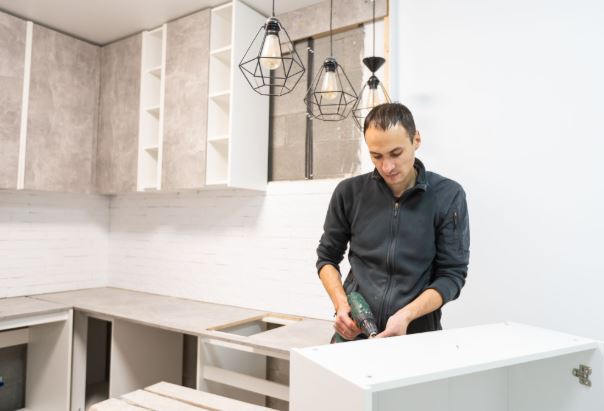 A kitchen renovation is one of the higher-stakes home improvement decisions most homeowners make, and the countertop choice sits at the center of it. Countertop installation in Arvada involves a specific set of regulatory requirements, material considerations, and contractor vetting steps that are worth understanding before any money changes hands. Here's a practical guide to making the right choices from material selection through final installation. Quartz vs. Granite: Understanding What You're Actually Comparing These two materials dominate the premium countertop market, and they perform quite differently in real-world use. Quartz is an engineered stone composed of 90 to 94 percent crushed natural stone bound together with 6 to 10 percent polyester or epoxy resin. That engineered composition is what gives quartz its consistent performance profile: superior stain and scratch resistance, a Mohs hardness rating of 7 to 8, and a non-porous surface that requires no routine sealing. Because the manufacturing process is controlled, quartz delivers predictable results across slabs, which makes color matching and seam work more straightforward than with natural stone. Most quartz manufacturers back their products with 10 to 15-year limited warranties covering materials and installation defects. Granite is entirely natural, which means every slab is genuinely unique in appearance. That aesthetic individuality is its primary appeal. The trade-off is that granite's natural porosity makes it more susceptible to staining and etching than engineered quartz. The National Stone Institute recommends sealing granite annually to maintain stain resistance. Hardness ratings fall between 7 and 7.5 on the Mohs scale, comparable to quartz, but the maintenance requirement is meaningfully higher. Granite warranties from fabricators typically run one to five years, significantly shorter than quartz. Neither material is universally superior. Quartz suits households that want low maintenance and consistent performance. Granite suits those who value natural character and are willing to maintain the surface. Your specific use patterns and tolerance for upkeep should drive the decision more than aesthetics alone. What DIY Installation Actually Involves Laminate countertops are genuinely accessible for experienced DIYers, involving relatively straightforward cutting, edge-banding, and adhesive work with standard tools. Once you move to quartz or natural stone, the project changes substantially. Quartz installation is classified as intermediate to advanced difficulty. It requires a wet saw with a diamond blade, a heavy-duty router with stone-specific bits, and pneumatic handling tools. The weight alone, approximately 20 pounds per square foot for engineered quartz, requires multiple people and careful planning. Natural stone like granite is more demanding still. The National Association of Home Builders advises against DIY installation for granite and marble due to the fabrication complexity and the structural loads these materials impose on cabinetry. Substrate preparation is a critical prerequisite that DIYers frequently underestimate. Cabinet framing and underlayment must meet specific levelness tolerances of plus or minus one-eighth of an inch over a ten-foot span. Cabinets that are undersized or in any way compromised structurally can fail once heavy stone is installed. The safety dimension of stone work deserves specific attention. Cutting and grinding stone generates respirable crystalline silica dust, a serious long-term health hazard. OSHA's Silica Rule establishes permissible exposure limits for occupational settings, but the practical takeaway for any installer, professional or otherwise, is that wet cutting and local exhaust ventilation are not optional precautions. Anyone cutting stone without proper dust control is taking a genuine health risk, regardless of whether OSHA is in the room. How Colorado Licensing Applies to Arvada Countertop Projects Colorado requires general and specialty contractors, including countertop installers, to hold a valid state license when the total labor cost exceeds $500. Working with an unlicensed contractor above that threshold voids contractor liability coverage and leaves the homeowner financially exposed if something goes wrong. This is not a technicality worth testing. In Arvada, building permits are required for kitchen remodeling work under the municipal code, particularly when installation involves concurrent electrical or plumbing modifications such as relocating outlets or reconfiguring drains. The Arvada Building Department performs its own contractor license verification before approving permits, so using an unlicensed installer creates a practical compliance problem beyond just the liability exposure. There is no centralized Arvada registry of pre-approved countertop installers, which means homeowners carry the responsibility for vetting whoever they hire. Active Colorado contractor licenses can be verified directly through the Colorado Department of Regulatory Agencies' public database. Any written contract should explicitly detail material specifications, installation timeline, warranty terms, and cleanup responsibilities before any work begins. Where to Purchase Materials in the Arvada Area Homeowners in the Arvada and greater Denver metro area have three primary purchasing paths. The first is buying materials only for self-installation, which is viable for laminate and manageable for experienced DIYers comfortable with the tools and techniques described above. The second is purchasing through major national retailers like Home Depot and Lowe's, both of which have locations in the area. These retailers offer in-store displays, online ordering with local delivery, and installation referral programs. When you use a retailer's installation service, the actual work is performed by third-party independent contractors, not retailer employees. The national retailer's liability for installation quality is limited, meaning your practical recourse for workmanship issues runs through your direct contract with the installer, not through the retailer. The third option is working directly with a local specialty fabricator. According to the National Kitchen and Bath Association, specialty fabricators often provide capabilities that national retailers don't match: custom edge profiles, precise seam color matching, and site-specific fabrication tailored to non-standard kitchen dimensions. For complex kitchens or premium materials, this path typically produces better results. Material costs vary by supplier, fabrication complexity, shipping, and market conditions. There is no published regional average for Arvada, so obtaining direct quotes from multiple local fabricators is the only reliable way to budget accurately. Warranties and What Voids Them Performance claims like "stain-resistant" and "scratch-resistant" have no binding definitions in consumer product marketing. Before finalizing any material purchase, request official test data from the fabricator or manufacturer confirming compliance with the relevant ASTM standards. Reputable suppliers will provide this documentation without resistance. Warranty coverage for both quartz and granite is typically contingent on professional installation. Most manufacturer warranties specify that DIY installation, or professional installation that deviates from written specifications, voids the coverage. This means that saving installation labor costs can eliminate the manufacturer warranty entirely, shifting all future repair and replacement costs to the homeowner. Colorado contractor licensing creates a useful baseline of financial and legal accountability, but it does not certify installation quality. No state or municipal authority specifically certifies countertop installer competence, though third-party industry certifications exist through organizations like the Marble Institute of America. Homeowners need to evaluate workmanship quality independently through portfolio review, client references, and direct conversation with the installer about their specific experience with the material you're choosing. Questions Worth Asking Before You Commit A few direct questions to any fabricator or installer before signing a contract will surface most of the information you actually need. Ask whether they hold an active Colorado contractor license and offer to verify it. Ask what warranty the manufacturer provides and whether their installation method preserves it. Ask what their process is for substrate inspection and whether they will flag any cabinet issues before installation begins. Ask who performs cleanup and what that includes. And ask for references from clients who had similar material and scope installed within the past year. The countertop market in Arvada is competitive, with both national retailers and local specialty fabricators offering legitimate options across a range of budgets. The decisions that most affect whether your project goes smoothly are made before installation day: choosing the right material for your household's actual needs, verifying your installer's credentials, and reading the contract carefully before signing it. |
| Created | 2 Aug 2020 |
| Total credit | 790 |
| Recent average credit | 0 |
| Cross-project stats | SETIBZH Free-DC BOINCstats.com |
| Country | United Kingdom |
| Type | Other |
| Members | |
| Founder | Rosarito Soby |
| New members in last day | 0 |
| Total members | 0 (view) |
| Active members | 0 (view) |
| Members with credit | 0 (view) |
Copyright © 2026 Arizona State University